


 Sustainability is literally at the heart of what we do; from the tree production methods to our employment approach to our land management on this beautiful site.
 Fruit and nut tree production is not really a 'natural' process. Trees are grafted; they are planted as already established plants, dug up and moved to be grown on or sold to customers. Lots of the processes involved in raising young trees requires compromises.
We plough ; but we only do it twice in our 8 year rotation and only in order to get trees started; or to establish green manures, which then grow for 5 years, undisturbed.
We weed ; young trees cannot cope with competition from grass or 'weeds' (other plants) when they are trying to establish. But we make a choice not to use chemical herbicides that have now been proven to poison the people using them and poison the environment in which they are used. We have also choosen not to continually disturb the soil with fossil fuel powered machinery, which in our experience causes compaction and does not leave any diversity of plants. And so the compromise we make is we use plastic weed fabric between the tree rows. This is not ideal; we all know the issues around plastic use in the environment. However, in the 'artificial' environment that is tree production, we have to use something to minimise competition from weeds. For us, our weed fabric , which we have been re-using for nearly 10 years now, is a compromise. At different times of the year (winter and spring) we do have living 'weed' pathways, before mulching them out with the weed fabric to keep them under control, and this is the compromise on our scale if we do not want to use diesel powered machinery all season or chemical herbicides or pay scandalously low wages to our employees. We have experimented and continue to experiment, and will we continue to assess what is the most sustainable methods for the nursery as a business, the environment we work in and the people who work it.
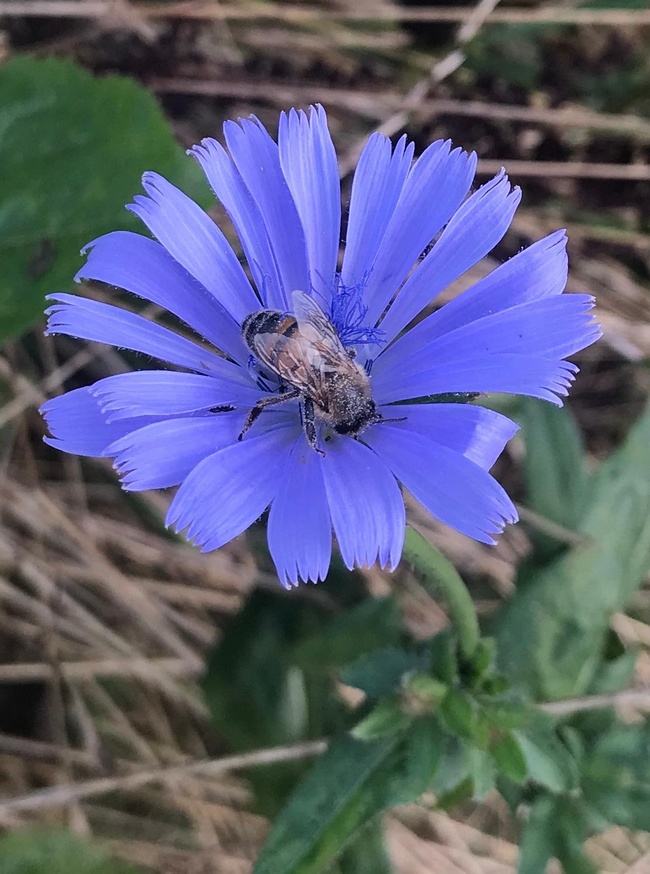
We mulch under the trees with organic material like straw and woodchip to keep weed burdens low. We also selectively weed and this proves to be an important process; we know which plants actually do not interfere or cause competition with our trees, and many annual 'weeds' are perfectly fine to be left in the row, we selectively encourage them. Some of our favourites are Violas, Trailing St. John's Wort, Scarlet pimpernel, Trefoil, White clover, Speedwell, Fumitory. These provide nectar for pollinating insects, support soil life through a diversity of plant species, and provide habitat for predatory insects like ladybirds, hover flies and beetles.
We don't use any artificial fertilisers in the production of our trees, instead we rely on plants to build soil ; long-term deep-rooted leys/green manures to build soil fertility as part of our growing rotation. In our potted trees we use organic chicken manure pellets as a feed to keep trees healthy.
Our 15 acre nursery site is managed to encourage as much biodiversity as possible. The surrounding hedges are left to grow thick and tall, we flail them infrequently and only ever one face at a time. We have a 3m wide perimeter around the nursery that is left as a scrubby 'rough' area for natural regeneration, only cutting every few years when woody species start taking over. We have flowering green manures and flower margins to attract wildlife and provide food. There is a cornucopia of wildlife at this nursery; insects, birds, mammals. We rely on natural predatory insects and animals to keep unwanted attacks on our trees in check. Ladybird, parasitic wasps and hover fly larvae devour aphid populations; toads and beetles eat slugs and slug eggs; buzzards, kestrels and red kites predate the voles; foxes and owls eat the rabbits.
We are a Living Wage employer; our amazing team work all year round to grow the finest trees for our customers and they deserve a good rate of pay. UK Horticulture is a shamefully low-wage industry that does not reflect the skills and hard work required by those that work in this sector. It should never be a race to the bottom in terms of production or employment values.
Growing fruit and nut trees, with the promise of feeding people and wildlife, and helping to support and build ecological diversity in our landscapes is our passion, and we are constantly figuring out the best way to share that passion and expertise with customers around the country in the most sustainable way we can.